Mintera
— / month · — / year
Keep backups, archives and AI data on our infrastructure operated in France. From TB to PB, with no additional hardware investment and no egress or API fees.
Capacity, downloads and budget: compare Mintera, AWS, Wasabi, Microsoft Azure and Google Cloud in real time.
Progressive scale · Exact values editable
Downloaded: 20 TB / month
 France · from €6/TB
 S3 Standard · Paris
 Pay as You Go · EMEA
 AzureBlob Hot LRS · France
 Google CloudStandard · Paris*
Wasabi: conditions need review for this scenario.
Capacity: 1–10,000 TB · Downloads: 0–300% · FX: 0.5–2.
Storage + egress · Estimate excl. VAT · Common scale for all five providers.
Excludes chargeable API requests, options, support and migration. Model updated on 13 October 2026. * Google: editable reference rate, to be confirmed.
1.15 is a calculation assumption, not a market quote.
Google reference published in May 2024: $0.023. Replace with your current rate.
AWS: S3 Standard, Paris, tiered storage and egress prices. The allowance is shared across AWS services. Free transfer paths, negotiated prices and special transfer arrangements are excluded. Azure: Blob Storage Hot LRS, France Central, flat namespace, tiered storage. Internet egress to Europe over Microsoft Premium Global Network, allowance shared across services; over 500 TB/month requires a quote. Google: regional Standard Paris (europe-west9), internet egress to Europe, without the US free tier or Autoclass. Wasabi: EMEA Pay as You Go, minimum 1 TiB billed; free egress remains subject to its usage policy.
Input volumes are decimal (1 TB = 10¹² bytes), converted to GiB/TiB for AWS, Azure, Google and Wasabi storage and AWS/Google egress. Azure egress uses the public table with decimal GB (1 TB = 1,000 GB). Mintera: entry price €6/TB/month, terms confirmed by quote. This compares costs, not equivalent resilience, features or SLAs.
— / month · — / year
— / month · — / year
— / month · — / year
— / month · — / year
— / month · — / year
Year = 12 months at constant usage. Azure: quote above 500 TB monthly egress. Wasabi: no amount shown outside the modelled egress or retention conditions.
Logos identify the providers being compared.
Each file is stored as an object: its contents, a key to retrieve it and descriptive metadata. Objects are grouped into buckets, storage spaces that your software accesses through the S3 API.
Backup, media, applications and data lakes.
Store, find and retrieve your objects.
Objects: content + key + metadata.
Access uses compatible software: S3 does not directly replace an office shared drive. We test the operations and restores your tools need before migration.
Store external backups and prepare recovery. Validate the retention and protection mechanisms required for your use case.
Keep datasets, checkpoints and AI-generated data in persistent storage.
Keep documents and data accessible without managing additional hardware.
Support growing footage, images and continuously collected data.
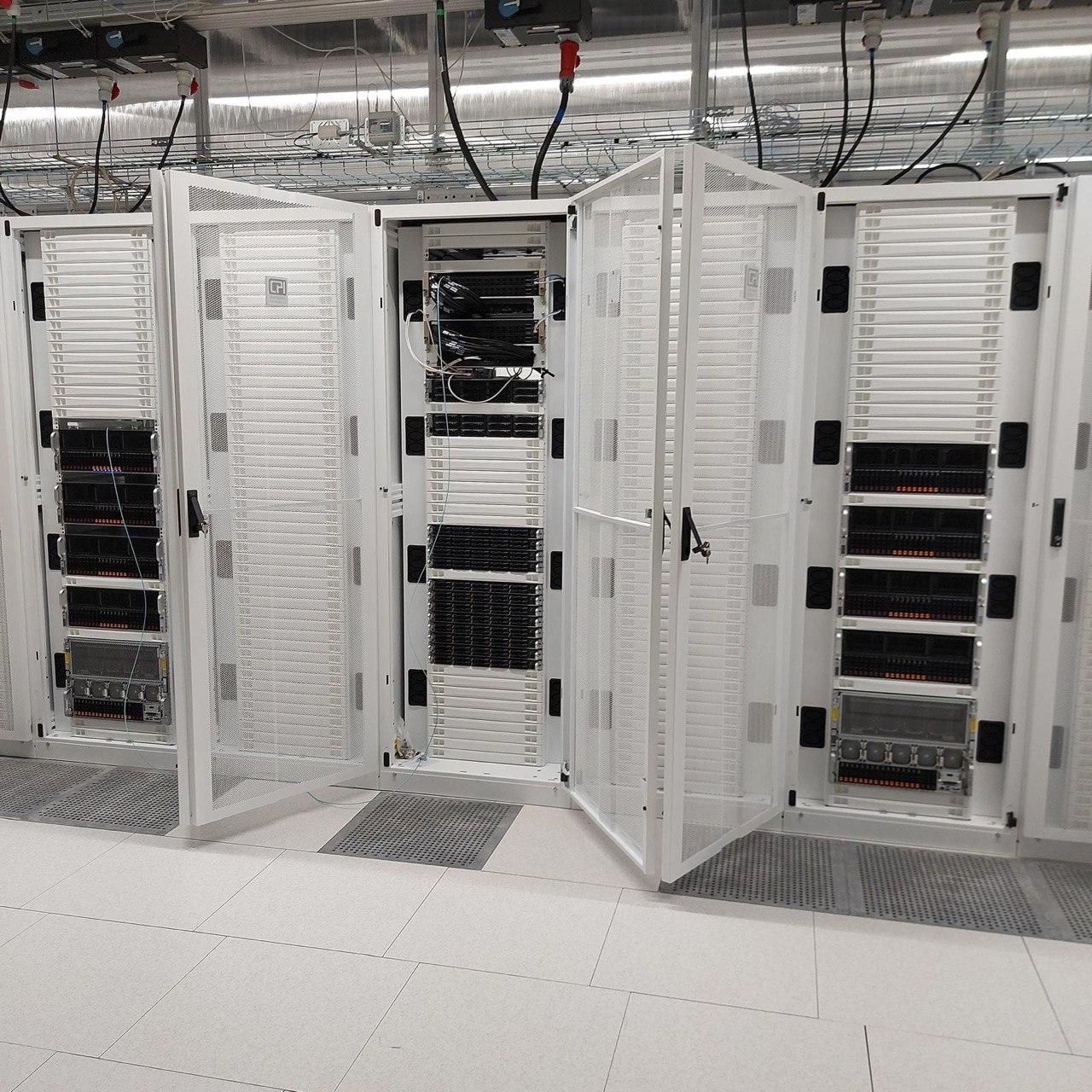
Mintera operates your storage in the Paris region. Add capacity without purchasing more racks or drives, or having to operate them yourself.
For private or hybrid environments, we scope connectivity, access and the level of isolation your project needs.
Explore our infrastructureCertifications apply to the data centre. Service scope, commitments and support arrangements are specified in your quote.
Your backup tool or application connects to an S3 endpoint. We prepare the connection and validate the operations your environment actually needs.
From the first uploaded object to a recovery test, these are the technical decisions we work through with your team.
Upload (PUT), read (GET), inspect metadata (HEAD), list and delete: we test the operations used by your S3 client, pagination and error responses. For large files, multipart upload transfers parts concurrently and lets a failed part be retried. Support and settings are validated with your software.
Acceptance: upload, read-back, integrity checking and recovery after interruption. Dependencies on other AWS services are identified separately.
Throughput depends on network capacity, object sizes and concurrent transfers. A million small files behaves differently from a few multi-gigabyte videos. We define a representative dataset and run tests from your environment.
Measure: effective read/write throughput, requests per second, p95 latency and the time required to restore priority data.
Versioning retains multiple states of an object. Object Lock aims to prevent deletion of a protected version for a defined period. Depending on the mode, bypass permissions may exist: versioned does not mean immutable. We check availability, retention modes and configuration before including this protection in your architecture.
Acceptance: attempted deletion using the agreed roles, version recovery and retention expiry checks. RPO defines tolerable data loss; RTO defines the target recovery time.
We scope access per application and separate write, read and administrative permissions where needed. HTTPS connections, secret storage and key rotation form part of the configuration. Encryption at rest or client-side, key management and access logs are scoped with your security team.
Acceptance: permitted access, denied access, key revocation and the agreed audit evidence. Available mechanisms are documented in the service scope.
Durability concerns the risk of losing an object; availability concerns being able to access it. Replication and erasure coding are different protection mechanisms; distribution across disks does not demonstrate replication across sites. We clarify failure domains, recovery scenarios and appropriate commitments with you.
Contract scope: agreed architecture, SLA, support, recovery responsibilities and exclusions. The HDS and ISO 27001 certifications cited apply to the data centre.
Capacity planning includes retained versions, growth and, depending on service behaviour, unfinished multipart uploads. We define retention and deletion rules, then validate the required functions. Migration combines an initial transfer with delta synchronisation and checks on objects, metadata and versions in scope.
Acceptance: reconciled inventory, verified integrity and an export read back using your software. Mintera charges no egress fees; costs from the source provider, network and professional services must still be assessed.
Bring your software and version, initial capacity, growth, retention and recovery target. We turn them into a test scope with decision criteria.
Integration is scoped separately from the capacity price. Here is what we prepare with your IT team or integrator.
SLAs, replication, retention/immutability functions, connectivity and support are confirmed in the contractual scope. HDS and ISO 27001 certifications cited apply to the data centre.
Capacity, software, S3 functions and validation criteria.
A test environment and connection support.
Transfer, access and recovery before your decision.
A clear need. A first conversation. A practical next step.